
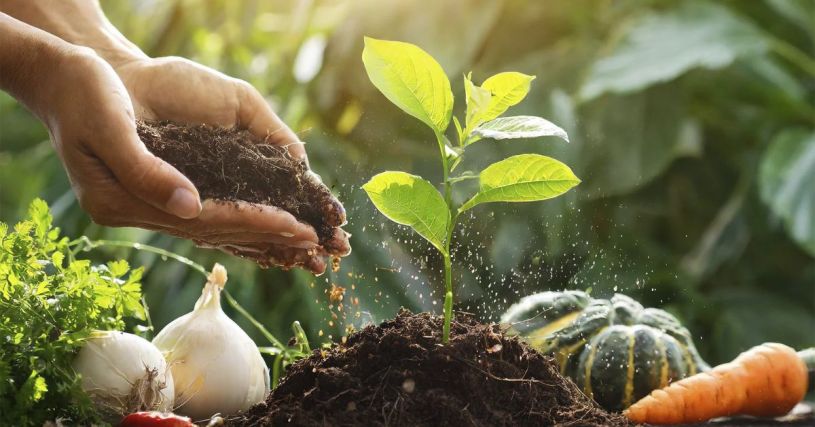
Introduction: A Shift Towards Sustainable Agriculture
The demand for sustainable and environmentally friendly agricultural practices has been growing rapidly in Europe, driven by the increasing awareness of climate change, soil degradation, and the long-term health of ecosystems. In response to these concerns, organic fertilizers are gaining substantial traction among farmers, agricultural organizations, and policymakers. These fertilizers, derived from natural sources such as compost, manure, and plant residues, play a crucial role in improving soil health, increasing crop productivity, and reducing dependency on chemical inputs. As a result, the Europe organic fertilizer market is emerging as a key component of the region’s transition to sustainable agriculture.
Market Overview: Growth Driven by Eco-Conscious Farming
Organic fertilizers are not only vital for maintaining soil fertility but also help in enhancing microbial activity, improving soil structure, and boosting plant resilience. This has made them increasingly attractive to European farmers seeking long-term solutions for improving yields while preserving natural resources. According to a report by Persistence Market Research, the Europe organic fertilizer market is expected to reach a valuation of USD 2,298.4 million by 2025. Furthermore, the market is projected to grow steadily, attaining a value of USD 3,525.0 million by 2032, reflecting a compound annual growth rate (CAGR) of 6.3% during the forecast period from 2025 to 2032.
This notable growth is being driven by the European Union’s policies that promote organic farming, soil restoration, and reduction of synthetic agrochemical use. Incentives, subsidies, and research funding in favor of organic inputs further strengthen market prospects. Additionally, rising consumer demand for organic food products is encouraging more farmers to adopt organic practices, thereby creating a robust ecosystem for the growth of the organic fertilizer industry.
Why are organic fertilizers important for sustainable farming in Europe?
Organic fertilizers are critical for sustainable farming in Europe because they support long-term soil fertility and reduce reliance on synthetic chemicals. By enriching the soil with natural nutrients and enhancing microbial activity, these fertilizers improve soil structure and water retention capacity. They also lower the risk of soil and water contamination, aligning with EU environmental goals. With increasing regulations on chemical fertilizer use and consumer preference for organic products, organic fertilizers offer a viable path for farmers seeking sustainability, profitability, and compliance with regional standards—making them a cornerstone of Europe’s sustainable agriculture future.
The Science Behind Soil Health: How Organic Fertilizers Make a Difference
Soil health is fundamental to productive agriculture. Healthy soil contains a diverse population of microorganisms that contribute to nutrient cycling, disease resistance, and plant development. Organic fertilizers introduce essential nutrients in a slow-release form, allowing for more balanced plant nutrition compared to the rapid-release action of chemical fertilizers. These natural inputs also improve soil organic matter content, which is vital for enhancing soil aeration, water retention, and root penetration.
Furthermore, organic fertilizers help build a stable soil ecosystem. They feed beneficial microorganisms, such as mycorrhizal fungi and nitrogen-fixing bacteria, that assist in breaking down organic material into forms plants can absorb. This biological activity results in long-term soil fertility and a reduced need for repeated fertilizer application, which is both cost-effective and environmentally sound.
Yield Improvement Through Sustainable Nutrition
One of the primary goals for farmers is maximizing yield without compromising the integrity of the soil. Organic fertilizers contribute to this goal by providing a steady supply of macronutrients (nitrogen, phosphorus, potassium) and micronutrients (calcium, magnesium, zinc) that are vital for plant growth. These nutrients are released gradually, which supports healthy root development and consistent crop performance throughout the growing season.
Moreover, crops grown using organic fertilizers often exhibit greater resilience to stressors such as drought, pests, and diseases. This resilience translates into better yields over time, as plants are able to sustain growth even under suboptimal conditions. Studies conducted in various parts of Europe have shown that farms using organic fertilizers experience improved crop quality and higher market value, particularly in the organic food segment.
Environmental Benefits and Carbon Sequestration
The use of organic fertilizers aligns with broader environmental goals, such as reducing greenhouse gas emissions and restoring degraded soils. Unlike synthetic fertilizers, which are energy-intensive to manufacture and often contribute to nitrogen runoff and water pollution, organic fertilizers are typically made from recycled agricultural waste, reducing overall environmental impact.
Additionally, organic fertilizers enhance carbon sequestration by increasing soil organic carbon content. This helps mitigate climate change by capturing atmospheric carbon dioxide and storing it in the soil. As Europe advances toward its climate targets, such as the EU Green Deal and Farm to Fork Strategy, the role of organic fertilizers becomes even more essential in the fight against environmental degradation.
Policy and Regulatory Support in Europe
Government support is a key driver for the growth of the organic fertilizer market in Europe. The European Union has implemented several policies aimed at promoting organic farming, reducing pesticide usage, and improving soil health. These policies include financial incentives for farmers transitioning to organic practices, as well as certification programs and research grants focused on sustainable agriculture.
Furthermore, countries like Germany, France, Italy, and the Netherlands have developed national action plans that emphasize the reduction of synthetic fertilizers and encourage the use of organic alternatives. These initiatives are not only enhancing adoption rates but also creating opportunities for domestic manufacturers and international suppliers to expand their presence in the European market.
Emerging Trends and Technological Innovations
As the market evolves, new innovations are reshaping the landscape of organic fertilizers. Manufacturers are investing in the development of bio-based fertilizers enriched with plant growth-promoting microbes (PGPMs), amino acids, and enzymes. These advanced formulations enhance nutrient uptake and provide targeted benefits such as improved root health and faster growth cycles.
Precision agriculture is also playing a growing role in optimizing organic fertilizer application. By using data analytics, satellite imagery, and soil sensors, farmers can assess soil nutrient levels more accurately and apply organic fertilizers in the right amount at the right time. This not only improves efficiency but also reduces input costs and environmental footprint.
Market Challenges and the Path Forward
Despite its many advantages, the organic fertilizer market in Europe faces a few challenges. Limited nutrient concentration compared to synthetic options often requires larger quantities of organic fertilizers for the same yield result. Additionally, inconsistent quality and lack of standardized formulations can be a hurdle for large-scale commercial agriculture.
However, these challenges are being addressed through improved production technologies, stricter quality control standards, and research on nutrient-rich organic blends. The increasing awareness among farmers, coupled with rising demand for organic produce, is expected to overcome these barriers and ensure sustained market expansion.
Conclusion: A Sustainable Future Rooted in Organic Practices
The Europe organic fertilizer market is poised for significant growth, both in economic value and environmental impact. With projections indicating that the market will rise from USD 2,298.4 million in 2025 to USD 3,525.0 million by 2032 at a CAGR of 6.3%, it is clear that organic fertilizers are set to become a cornerstone of sustainable agriculture in the region. As farmers, consumers, and policymakers align their efforts toward a greener future, the adoption of organic fertilizers offers a practical and profitable solution to enhance soil health, increase yield, and protect the environment for generations to come.
Explore the Latest Trending “Exclusive Article” @
- https://www.openpr.com/news/4082776/europe-organic-fertilizer-market-to-surpass-usd-3-5-billion
- https://www.linkedin.com/pulse/europe-organic-fertilizer-market-demand-rising-sector-ajay-patil-1f9of/
- https://medium.com/@apnewsmedia/europe-organic-fertilizer-market-insights-for-sustainable-farming-7e6752ddbcae
